

🚨 Acast Just Turned Its First-Ever Profit — By Inventing a Metric That Grew Only 2%


Did someone forward this to you?
Become one of the more than 1000+ valued email subscribers. Find Out More 👈


If you love travel, check out our sister publication “Mencari’s Travel Wire”
👋 Hi, Podsky!
This week’s story is really one story told four ways: platforms are consolidating both the money and the commercial control in podcasting, and they’re doing it in plain sight, in their press releases. Acast and SiriusXM each reported real earnings growth this week – and each is leaning on numbers that flatter a narrower story than the headlines suggest.
Meanwhile, two separate deals landed in our inbox, showing exactly how that consolidation reaches independent producers: not through splashy acquisitions, but through “we’ll handle sales and hosting; you keep making the show” partnerships. Add in Forbes’ annual pay list, and the pattern holds all the way to the top: growth and control keep pooling upward, and the deal structure — not the headline number — is what actually determines whether you get a piece of it.
If this is your first time here, welcome. Over 1,000 podcast industry readers already call Podwires home. Join them here.
Independent media only works when communities back it. Subscribe, share, and support the creators in your corner—starting with a Podwires paid subscription that keeps this newsroom running.
We want everyone to know about this initiative, so please spread the word by sharing the email with your friends! (copy URL here)
And, as always, send us feedback at editor@podwires.com
Big week. Let’s get into it.
Today’s reading time is 5 minutes. - Miko Santos (July 27, 2026)
🎙️ Today, we have exclusive insights on:
Acast Just Turned Its First-Ever Profit — By Inventing a Metric That Grew Only 2%
SiriusXM’s Podcast Ad Business Grew 30% in Q2 — While the Company Missed Estimates
Two Deals in One Week Show Exactly How Platforms Are Buying Up Creator-Led Podcasts
The Money Gap: Forbes’ Highest-Paid Podcasters List Is a Reminder of Who Podcasting Actually Pays
🎧 Listen to the podcast - Podwires 5 Things

ACAST Q2 EARNINGS
Acast Just Turned Its First-Ever Profit — By Inventing a Metric That Grew Only 2%

Podwires Rundown: Acast’s own numbers show an audience that barely grew and a revenue line that grew a lot — and the metric doing the explaining is one Acast invented, reports on itself, and is now shopping to the IAB as an industry standard.
Source: Acast’s Q2 2026 interim report and press release (Jul 23, 2026), sent directly to Podwires by Acast’s own PR team. It’s hard to find a more directly interested source than a public company’s own investor materials, hand-delivered to the trade press by its communications department — read the framing accordingly.
Key Points:
Net sales hit SEK 775.6m (roughly $81M), up 28% year-over-year (29% organic) — Acast’s highest-ever quarterly revenue and its first positive adjusted operating profit (EBIT of SEK 31.6m) since going public.
Acast’s new self-defined metric, “Listens and Views” (audio downloads plus HLS-based video views, not yet including YouTube), grew just 2% year-over-year to 1.12 billion — while Average Revenue Per Listen or View jumped 26% to SEK 0.69. In plain terms: roughly the same amount of listening is generating a lot more revenue.
Video monetisation on Apple Podcasts scaled to 180+ shows and 1,000+ episodes since a May launch, with State Farm and T-Mobile as first advertisers — genuinely fast infrastructure movement, not just a press-release claim.
New signings this quarter: The Washington Post (two new shows), The Lonely Island & Seth Meyers Podcast, and viral hit The Comment Section with Drew Afualo — Acast is winning brand-name and celebrity content this quarter, not indie discovery stories.
Two Acast-affiliated shows won major honors this quarter — a Peabody for Divine Intervention and a Pulitzer for Pablo Torre Finds Out — real prestige the company is (accurately) using to argue for its creator-first model.
Why It Matters:
Acast’s CEO calls this “balanced, multi-engine growth,” and the topline numbers back that framing up — this is a real business turning a real corner into profitability. But look at what’s actually growing: total listening and viewing barely moved (2%), while the price Acast can charge per listen jumped 26%. That’s not audience growth, it’s yield growth — Acast extracting more revenue from an audience that isn’t meaningfully bigger than it was a year ago.
That distinction matters more than usual here, because Acast is simultaneously the company that invented the metric making this look like one unified growth story, the company reporting the results under that metric, and the company now working with the IAB to make “Listens and Views” the industry standard. We flagged the same dynamic with the AMP Accords a few issues back: a measurement framework is never neutral when the party defining it is also the one whose earnings depend on how it reads.
The Big Picture
For Independent Producers: Acast’s big signings this quarter — The Washington Post, Seth Meyers, and viral creator Drew Afualo — show where hosting network attention and resources are actually going. If you’re on Acast or considering it, ask directly how “Listens and Views” reporting will affect how your own numbers get presented to advertisers before it becomes the metric everyone quotes without question.
For the industry: a 26% jump in per-listen revenue during a quarter with almost flat listening growth suggests advertiser demand for measured, brand-safe podcast inventory is currently outpacing supply — good news for pricing power generally; it’s worth watching whether it holds through Q3.

TOGETHER WITH MENCARI TRAVEL WIRE
Your Next Adventure Starts Here

Mencari Travel Wire is the go-to travel newsletter for Australia and New Zealand — delivering destination guides, travel intel, and trip-planning essentials curated for readers who move with purpose. Whether you're chasing weekend escapes or planning your next big journey across the Tasman, we've got you covered.
Subscribe Free → TRAVEL WIRE
This section is a paid advertisement. If you are interested in advertising, let’s talk.
SIRIUSXM Q2 EARNINGS
SiriusXM's Podcast Ad Business Grew 30% in Q2 — While the Company It's Attached to Missed Estimates

Podwires Rundown: SiriusXM’s Q2 earnings call was framed as a podcast growth story — the parts that mattered most for everyone outside SiriusXM’s building were buried underneath it.
Source: PodcastNewsDaily, reporting on SiriusXM’s Q2 2026 earnings call (Jul 30, 2026). The growth figures originate from SiriusXM’s own investor materials and executive commentary — a public company narrating its results to shareholders has every incentive to lead with its fastest-growing line item.
Key Points:
Podcast advertising revenue rose 30% year-over-year — again the company’s fastest-growing segment, per CEO Jennifer Witz — but total Q2 revenue rose just 1% to $2.16B, meaning podcast growth is masking flat performance almost everywhere else in the business.
SiriusXM raised full-year guidance by only $25M across revenue, EBITDA, and free cash flow combined — a modest bump for a quarter the company is calling a podcast breakout.
The company’s “YouTube Audio” bet — an exclusive ad partnership currently in a testing phase — won’t move revenue meaningfully until H2 2027, per executives, so today’s 30% growth has nothing to do with it yet.
Self-pay subscriber adds were just 22,000 for the quarter, with churn at a record-low 1.4% — retention is genuinely strong; growth is not.
Executives credited the podcast gains to “improved CPM rates and higher sell-through” — both describe existing inventory selling for more money, not new inventory, new shows, or new voices entering SiriusXM’s network.
Why It Matters:
A 30% jump in podcast ad revenue is real, and it’s the second platform this issue alone leaning on a podcast growth number to offset softness elsewhere in the business — Acast, above, is doing the same thing with a different metric. That’s a pattern worth naming across companies, not evaluating quarter by quarter as if each one were a standalone surprise.
It also lands in the middle of the same measurement credibility problem — the gain here is concentrated in pricing on existing SiriusXM-network inventory (better CPMs, higher sell-through), not expanding demand for shows outside it. “Podcast ads up 30%” sounds like unambiguous good news for podcasting broadly until you notice it’s being used to paper over 1% overall growth and a guidance raise smaller than the headline suggests.
The Big Picture
For independent producers: Don’t read “podcast ad revenue up 30%” as “more ad budget is coming for shows like mine.” This reflects existing SiriusXM network inventory selling at higher CPMs, not new demand reaching outside the catalogue. Use the genuine category-level tailwind (audio ad demand is up) when you pitch sponsors this quarter, but don’t expect this specific number to translate into bigger budgets for non-network shows.
For the industry: Expect more “podcast growth offsets platform stagnation” framing through the rest of 2026 as legacy audio companies lean on their podcast lines in earnings calls — worth tracking as a pattern across companies, not as a company-specific win.
PRESENTED BY PODWIRES MARKETPLACE
Build Better Podcasts With Podwires

Every great podcast needs the right team behind it. Podwires is a dedicated marketplace where creators can connect with skilled podcast producers, editors, and audio professionals who understand how to shape strong, polished shows.
Built for the podcast industry, Podwires brings together talent, opportunity, and visibility in one clean platform. Whether you are launching a new show or improving an existing one, Podwires helps you find creative partners who can make your production stronger.
Podwires connects clients with top independent podcast producers and freelancers through a dedicated marketplace built for audio work.
CONSOLIDATION WATCH
Two Deals in One Week Show Exactly How Platforms Are Buying Up Creator-Led Podcasts

Podwires Rundown: Persephonica and Billy Corgan didn’t sell their shows — they sold the right to sell their shows, and that structure is quietly becoming the default way independent producers scale up.
Source: Press releases from Acast (Jul 31, 2026) and PodcastOne, distributed via Guttman Associates PR (Jul 24, 2026) — both sent directly to Podwires by the companies’ own communications and publicity teams. Both are announcements written to be picked up close to verbatim by trade press; the “why now” behind each deal is worth more attention than the news itself.
Key Points:
Acast signed an exclusive, multi-year deal to handle sales, hosting, and distribution for Persephonica — one of the UK’s most respected independent podcast companies, behind Political Currency (Ed Balls & George Osborne), Bad Chat, Miss Me?, and Dig It — while Persephonica keeps creative control and its Sheffield headquarters.
PodcastOne (Nasdaq: PODC) acquired exclusive sales and distribution rights — not ownership — to Billy Corgan’s The Magnificent Others, an interview show that’s drawn 2 million downloads across 76 episodes since launching in 2025.
Neither deal is an acquisition of the underlying show or company; both are the “platform buys the commercial layer, creator keeps the IP” structure Forbes’ pay list (below) flagged as the better deal shape for top-tier talent – now visibly trickling down to mid-size independents.
Acast’s press release quotes its UK managing director calling Persephonica’s output “narrative influence... that no algorithm can manufacture” — marketing language for exactly the trust and audience relationship independent shows built without a platform’s help in the first place.
Both deals extend into video and multi-platform distribution, confirming that “sales and hosting” partnerships increasingly come with a video mandate attached, whether or not the underlying show was built for it.
Why It Matters:
These are small deals in dollar terms, but they’re a clean look at the actual mechanism by which independent podcasting consolidates — not big acquisitions making headlines, but a steady stream of “we keep making the show, they handle the money and infrastructure” deals that show up as press releases, not M&A filings. Multiply the Persephonica and Corgan deals by the dozens of similar ones signed quietly every quarter, and platform sales networks end up controlling the commercial terms for a large share of the medium without ever technically owning it.
The trade-off is real and not obviously bad: Persephonica gets Acast’s sales team and studio infrastructure; Corgan gets PodcastOne’s distribution reach and ad relationships. Both keep their IP. But “creative independence” and “commercial independence” are different things, and both press releases lean hard on the former to soften the latter — worth noticing, since it’s the exact same framing move Acast makes about its own audience numbers, above.
The Big Picture
For Independent Producers: If you’re offered a similar “we handle sales/hosting, you keep making the show” deal, get specific about what you’re actually giving up — usually ad-sales exclusivity and some pricing control — against what you’re gaining, and negotiate a defined term length and exit clause rather than accepting “multi-year” as a given.
For the industry: Expect this deal structure to keep moving down-market, from UK prestige podcasts and celebrity interview shows into smaller, category-specific independents — it’s a far lower-friction way for sales networks to grow inventory than outright acquisition.
This Week’s Skill Gap: This is exactly the moment to bring in someone who’s actually negotiated a sales or distribution partnership before — reviewing exclusivity terms, revenue splits, and exit clauses in a network deal is specialised contract work, not something to sign off on solo after just one call with a sales rep. It’s worth booking a consult through Podwires.com before signing anything described as “multi-year”.
Do you have a podcast trailer?
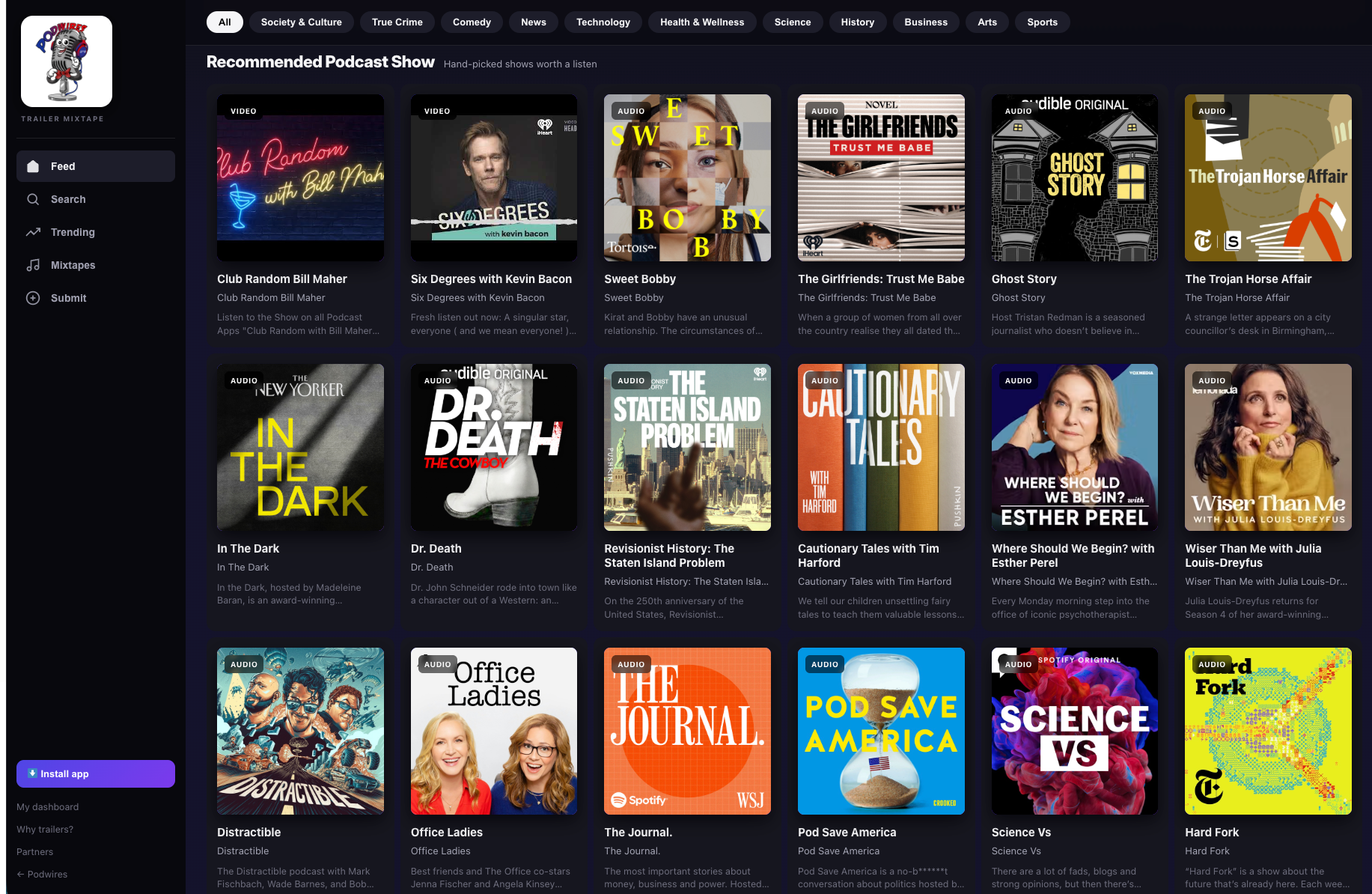
Discover your next favourite podcast in just 60 seconds.
New shows are launching faster than anyone can keep up with — so we built a shortcut.
Trailer Mixtape from Podwires is a hand-picked, human-curated feed of recommended podcasts, trailers, and standout episodes – with a clear reason for why each show was chosen so listeners can decide what to play next. Think of it as your discovery layer, minus the algorithm guesswork.
Whether you’re a listener hunting for your next obsession or a producer trying to see what the competition’s cooking, Trailer Mixtape gives you the first 60 seconds that matter – curated, not just recommended by a black box.
Add your recommended podcast, trailer, and why it’s worth listening to.
🎧 Press play on what’s next → podwires.com/trailermixtape
THE MONEY GAP
Forbes' Highest-Paid Podcasters List Is a Reminder of Who Podcasting Actually Pays

Podwires Rundown: Ten names on this list combined for roughly $430 million over the past year — a useful number for understanding where podcasting’s money concentrates and a mostly irrelevant one for planning your show’s business model.
Source: Forbes, by Matt Craig (Jul 30, 2026). Figures come from interviews with agents, managers, and lawyers rather than disclosed contracts — the people quoted are frequently the same people who negotiated (and benefit from publicising) these deals, which gives them an incentive to state figures on the high end.
Key Points:
Joe Rogan tops the list at an estimated $82M, followed by TBPN’s John Coogan and Jordi Hays at $70M (an OpenAI-backed show) and Steven Bartlett at $45M — three genuinely different revenue models: platform exclusive, VC-adjacent sponsorship, and independent.
Netflix’s aggressive 2025 entry into podcast bidding, reportedly offering $10M+ annual deals, is credited with breaking Spotify’s prior grip on marquee-talent negotiations — real platform competition that pushes top-line numbers up.
Newer deal structures — Jay Shetty’s reported $100M three-year Spotify/Netflix agreement is the example cited — increasingly let talent keep IP ownership while platforms pay only for distribution and ad-sales rights, in the same shape as the Acast/Persephonica and PodcastOne/Corgan deals above, just with far more zeroes.
Independent operators without platform backing (Joe Budden’s 70,000+ paid Patreon subscribers, Bartlett’s own model) show direct-subscriber revenue can compete with platform deals — but both built their audiences over many years before monetising this way.
The list explicitly excludes YouTube-only creators and radio shows and covers only June 2025–June 2026 podcast-specific income — a narrower, more curated number than the “highest paid” framing implies.
Why It Matters:
This list runs every year and gets treated as a signal about “podcasting’s” economics, when it’s really a signal about a specific tier of eight to ten shows with platform leverage or a decade of audience-building most producers will never have access to. The methodology — agent-supplied estimates on undisclosed contracts — should make readers treat the specific dollar figures as directional, not precise.
The more useful read for an independent producer isn’t the top-line numbers — it’s the deal-structure shift underneath them, and this issue has three examples of it at three very different scales. Platforms are increasingly competing on letting talent keep IP and control while paying for distribution rather than buying shows outright. That’s the negotiating principle worth understanding regardless of scale, because it’s the same question Persephonica and Billy Corgan just asked at a much smaller size than Jay Shetty.
The Big Picture
For independent producers: don’t benchmark your show’s health against this list — benchmark the deal structure instead. Any time you’re offered a platform or distribution deal, at any size, ask specifically who owns the IP and who controls ad sales; that question matters more than the headline number.
For the industry: Platform competition (Netflix, Spotify, and Amazon) for a handful of marquee names is real and rising, but it says nothing about ad demand or infrastructure for the other 99% of the medium — read this as talent-market news, not industry-health news.
JOIN PODWIRE’S MARKETPLACE
If you’re building a podcast team, join Podwires Marketplace to access monthly curated lists of experienced podcast professionals—producers, audio engineers, scriptwriters, and hosts—actively seeking new opportunities in news, storytelling, and audio journalism.

If you’re a podcast professional seeking your next opportunity, join the PodWires talent directory to connect with podcast companies and media organisations.

🚨 Stay on top of your deadlines with our weekly-updated calendar of fellowships, grants, training opportunities and podcasting events. If your organisation has a fellowship, grant or event to share, just 👉 fill out this form or 👉 reply to this message.
THAT’S WRAP
Got a story we should be covering, or think we got one wrong? Reply or write us at editor@podwires.com — we read everything.
SPONSOR US
Reach over 1000 podcast producers with your product.
Thousands of podcast producers, audio/video editors, podcasters, executives, and business owners worldwide read our newsletter. Contact us now.

📖 I appreciate you taking the time to read! See you in the next issue. Got a question or criticism? Just click on Reply. We can talk while we are here.
Please provide a press release along with a suitable landscape photo. Make sure it’s newsworthy. Send press releases to editor@podwires.com or click here. Editorially, we may rewrite headlines and descriptions.
📬 Sponsor us and get your brand in front of thousands of independent podcast producers and podcasters. Email us at sales@podwires.com for more information or as personal supporters via Patreon, as your contributions help us enhance the experiences of all our users.
🖊️We are delighted to hear from our subscribers! If our newsletter helped you or you have a success story, we would love to publish your testimonial. 👉 Post a Testimonial: Click here
🚀 We are here to help you succeed! We kindly invite you to complete a brief 5-minute survey to share more about your business and yourself. These questions will help us better understand you and promote your business as part of our mission. It’s a win-win!
🚨 Did someone forward the information to you?
Become one of the more than 1000 valued email subscribers. Find Out More 👈
We’d love to share what our Podwires readers have been saying!

We’re so grateful to our previous Podwires advertisers!

Podwires is here because of our incredible partners’ unwavering support. The Podwires readers receive journalism free of financial and political influence. If you found this valuable, consider Restacking so more people can see it. Get together with them today.